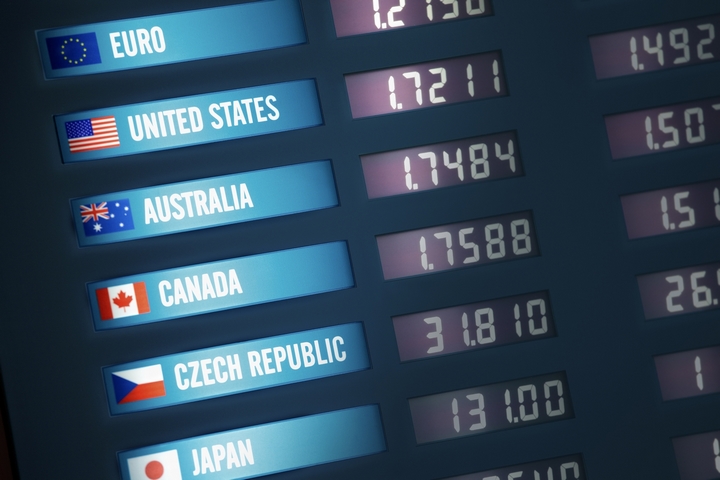
Foreign exchange rates are defined as the value of one currency in relation to another currency. It is possible to exchange one currency for another which is measured as a foreign exchange rate.
Over time, our world of business has become highly integrated creating a global market. As a result, businesses often end up dealing with foreign suppliers and clients which exposes the business to foreign exchange rate risk. Read below to understand how dealing with foreign currencies impacts businesses both directly and indirectly.
1. Foreign Suppliers

Anytime a business enters a contract with a foreign supplier that does not share their home currency, the business becomes exposed to foreign exchange risk. Any variations between the foreign and home currency can be either favourable or unfavourable for the business.
Fluctuations in the exchange rate can result in the business having to pay the supplier more or less than the original agreed upon price depending on the market’s activity. However, this risk is sometimes necessary for businesses in order to attain the services and products they need to do business in a competitive market.
2. Foreign Sales

As with foreign suppliers, foreign exchange risk exists with foreign sales too. If a business has clients in foreign countries, the currency rates will have a direct impact on the company’s bottom line for better or worse.
The foreign exchange rate risk has to do with how the business invoices their clients. If clients are invoiced in their home currency, there is a risk that you will receive less income if the exchange rates moves against you between the time the client is invoiced and the client pays the invoice balance.
3. Foreign Loans

If a business borrows or lends money to an entity in a country with a foreign currency, the amount to be repaid and interest is subject to foreign exchange rate risk. This means that the amount repaid and interest can go up or down depending on the foreign exchange rate which has a direct impact on the business’ expenses or income.
4. Indirect Impact

Even if a business does not deal with foreign suppliers or clients, the global market will still have an indirect effect on your business. For example, if your company uses trucks to move product to where it needs to be and the price of imported fuel goes up, your company will be impacted by the higher fuel rates despite non-existent foreign contracts. Foreign exchange rate risk is merely a consequence of operating a business.
Global events have an impact on foreign exchange rates too, some more severe than others. Political leaders, war, treaties and even natural disasters are all examples of factors that can have an impact on the global market and, ultimately, foreign exchange rates.
5. Foreign Exchange Rate Example
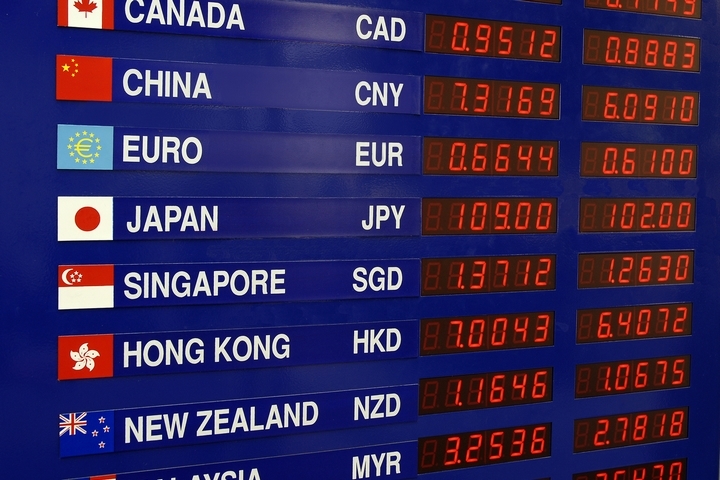
The theory behind money exchange rates has been discussed. To demonstrate how foreign exchange rates work in a practical sense, assume that the Canadian dollar (CAD) is worth $1.30 compared to one United States dollar (USD). This means that if you gave the bank $1,300 CAD you would receive $1,000 USD.
Let’s say a Canadian business enters a contract with a US company to pay $1,000 USD for a product in one month. Today, the Canadian business expects to pay $1,300 CAD for that product. However, in one month, the exchange rate between the US and CAD dollars could fluctuate requiring the Canadian business having to pay either more or less than $1,300 CAD.
This can go the opposite way as well if the roles were switched to a client scenario instead of a supplier scenario.